
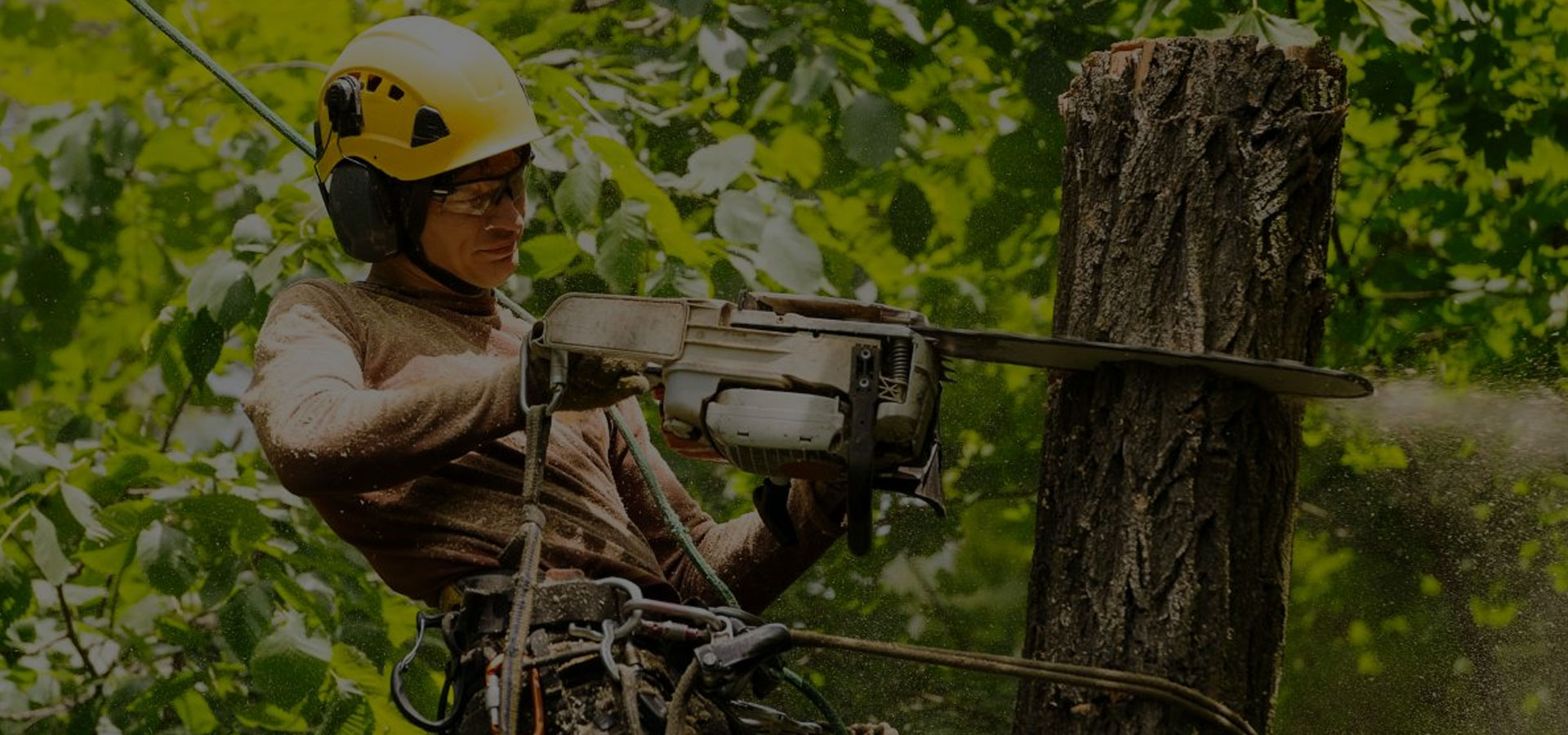
Tree health consultancy and inspection catches disease, decay and structural weakness while a tree can still be treated or managed before it has already become a hazard or died outright. Stump Pro has carried out tree condition inspections across Hobart, the greater Hobart region and for most areas of Southern Tasmania since 2010, and early diagnosis is consistently what separates a tree that can be saved from one that cannot.
This article covers what a professional inspection actually checks, the early warning signs of a declining tree, how internal decay is detected, and when a consultation leads to treatment instead of removal.
What Does a Tree Health Consultancy and Inspection Cover?
A thorough inspection assesses the whole tree, from root plate and trunk base through to the upper canopy, checking for decay, cavities, cracks, pest damage, and any changes in foliage density or colour. Soil quality around the base is checked too, since it’s a major factor in a tree’s overall condition, and the root system is examined to confirm it’s growing the way it should instead of being restricted or damaged. The output is a clear assessment of the tree’s condition and a recommendation, whether that is monitoring, treatment, pruning, or removal if the risk is too high to manage.
We carry out this same inspection before any pruning, reduction or removal job, so recommendations are based on the actual condition of the specific tree instead of a generic assumption about its species or age. Every arborist who carries out an inspection for us holds a nationally recognised arboriculture qualification, assessed under the Australian Qualifications Framework, so the person assessing your tree has met a recognised, verifiable training standard.
Early Warning Signs of a Dying or Unstable Tree
Many of the earliest signs of tree decline are visible from the ground if you know what to look for, well before a tree becomes an obvious hazard.
- Fungal growth or mushroom-like fruiting bodies at the base of the trunk or on roots
- Dead branches concentrated in one section of an otherwise healthy-looking canopy
- Cracks or splits in the trunk, particularly where a large limb joins it
- Sudden leaning, or soil lifting or cracking around the base of the trunk
- Thinning foliage, early leaf drop, or leaves that are smaller or paler than usual
Trees in built-up residential areas are also generally more exposed to stress from compacted soil, root disturbance and pollution than trees growing in bushland, which is one reason a Hobart backyard tree can benefit from a periodic check even without an obvious problem.
How Do Arborists Detect Internal Decay?
Internal decay is not always visible from the outside, so arborists use a combination of sounding, tapping the trunk and listening for the hollow tone that indicates internal cavity, alongside visual cues like bulging bark, old wounds and fungal indicators. More advanced cases can be assessed with specialist equipment such as a resistance drill or decay detection device, which measures internal wood density without needing to cut into the tree, though not every service carries this equipment as standard.
This kind of assessment is particularly important for large, mature trees near a house, driveway or public area, where the consequences of an undetected failure are far more serious.
Can a Declining Tree Be Treated Instead of Removed?
Not every tree showing signs of stress needs to come down. Localised decay can sometimes be managed by removing the affected limb, correcting drainage or soil compaction issues around the root zone, or addressing a specific pest problem before it spreads further. Removal becomes the recommendation when the risk of failure is high relative to the tree’s location, such as decay in the main trunk of a large tree overhanging a house.
Formal Reports for Council, Insurance or Development Purposes
A formal Tree Risk Assessment rates the likelihood and consequence of a tree failing, based on its condition, target occupancy nearby, and the load it is likely to face, giving a structured risk rating. On a construction or development site, an Arboricultural Impact Assessment goes a step further, looking at how proposed building work will affect trees being retained on or near the site, including how much of the root zone construction activity can safely encroach on. These formal assessment types are typically prepared by a consulting arborist, often at a higher qualification level than a general tree inspection requires, working to recognised industry frameworks. This is the kind of documented standard that carries weight with a council, an insurer or a developer, though it may mean being referred to a specialist consulting arborist rather than being provided as part of a standard inspection.
Catching a problem early through tree health consultancy and inspection is almost always cheaper and safer than dealing with a hazard once it has developed. Whether you simply want peace of mind about a tree in the backyard or need a formal report for a council, insurer or developer, the process starts the same way, with a qualified arborist actually looking at the tree in person.
Stump Pro has inspected and assessed trees across Hobart, the greater Hobart region and for most areas of Southern Tasmania since 2010, for everything from single households to large commercial and government sites. Call 0437 339 063 today or book a quote at stump-pro.com.au.
Additional guides: “What an Arborist Report Tells You About Your Property Risks“; “Can You Save a Splitting Tree Branch Without Cutting It Down?“; “How to Spot the Early Warning Signs of a Dying, Unstable Tree“; “Do You Need Council Approval to Clear Trees on Your Property?“; “Why Commercial Property Owners Need Regular Tree Risk Assessments”


