
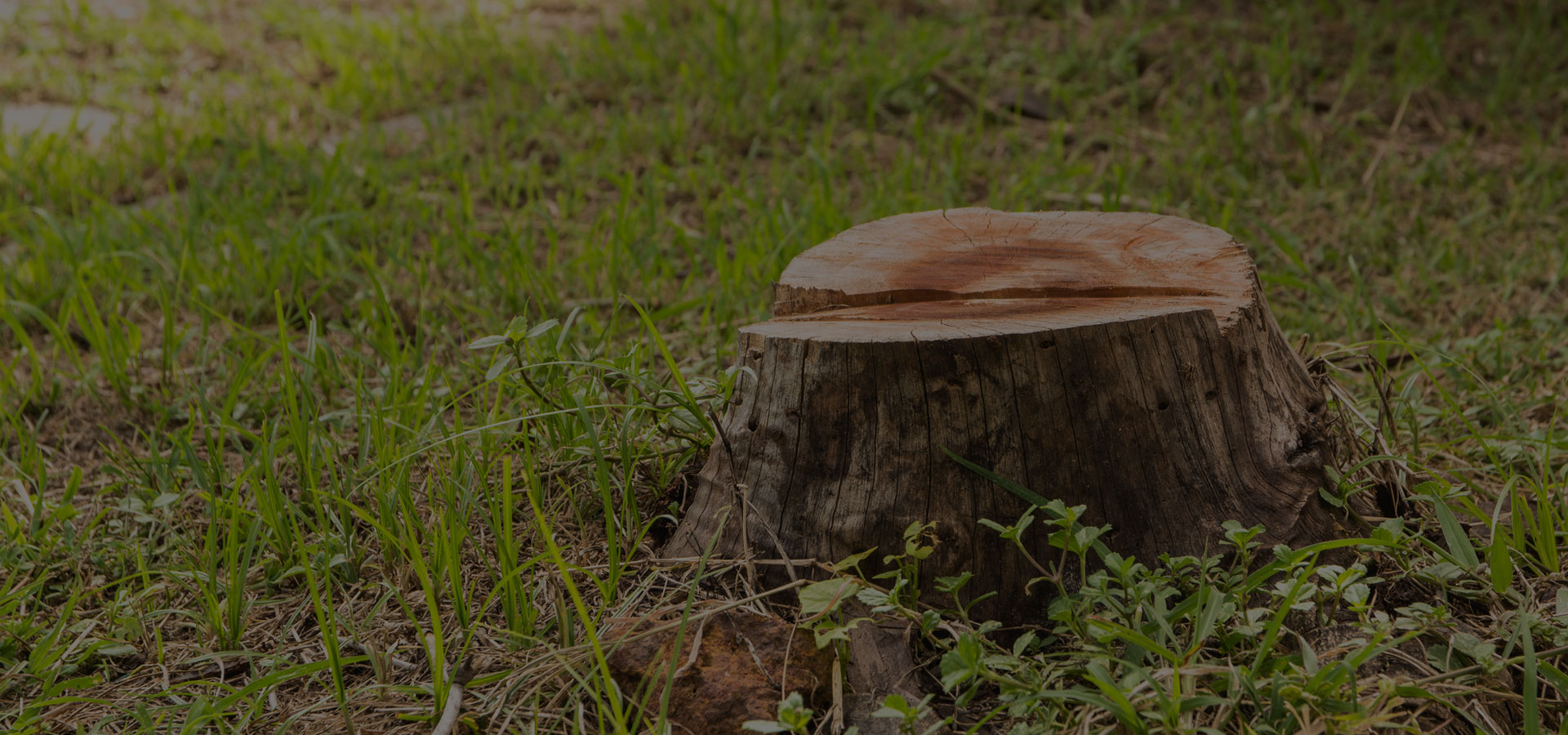
Stump poisoning and root removal stops a cut stump from resprouting by applying a targeted herbicide to the freshly cut surface, where it moves down into the root system and prevents new shoots forming. Stump Pro offers chemical stump treatment across Hobart, the greater Hobart region and for most areas of Southern Tasmania, alongside grinding, for stumps where grinding alone isn’t the full solution.
This article covers how stump poisoning works, which trees actually need it, how long it takes, and whether it poses any risk to nearby plants or soil.
How Does Stump Poisoning and Root Removal Actually Work?
A registered herbicide is applied directly to the cambium layer, the thin ring of living tissue just under the bark on a freshly cut stump surface, within minutes of the cut being made while the tissue is still able to draw the chemical down into the root system. Once absorbed, it disrupts the root system’s ability to send up new growth, and the stump gradually breaks down instead of resprouting.
This is different to simply spraying a stump that has already dried out, which is far less effective because the cut surface has sealed and can no longer draw the chemical down efficiently.
Which Trees Actually Need Stump Poisoning?
Grinding alone is enough for most single-trunk garden trees, because the structural root crown that drives most regrowth is removed with the stump itself. Species known for aggressive suckering and regrowth from lateral roots, however, will often resprout even after grinding unless the root system is also treated chemically.
- Willows, poplars and privets are common regrowth risks after cutting alone
- English elm and some wattle species also sucker readily from root fragments
- Any stump you plan to leave in place rather than fully grind out benefits from treatment
- Weed species trees removed from bushland regeneration areas almost always need it
How Long Does It Take for a Poisoned Stump to Die?
Most treated stumps stop sending up new growth within a few weeks, though full breakdown of the stump and root system can take one to two seasons depending on the species and the size of the root mass. Because the stump is left in place to break down naturally, treatment is best suited to stumps you’re happy to leave over ones you need cleared or ground down straight away.
Does Stump Poison Leach Into the Soil and Harm Other Plants?
The herbicides used in professional stump treatment are applied in small, targeted quantities directly to the cut surface, not sprayed broadly across the soil, which limits the risk of it moving to nearby plant roots. That said, it’s worth waiting before planting directly over a treated stump site, and avoiding treatment on stumps within the root zone of a tree or garden bed you want to keep unaffected.
This kind of judgement call is best made on site, particularly on smaller suburban blocks where garden beds sit close to the stump.
Stump Poisoning or Grinding: Which Is the Right Fit?
Grinding is the right choice when you want the stump gone and the site cleared straight away, since it removes the physical stump and levels the ground for turf, paving or a new planting. Stump poisoning is the better fit where the stump is hard to access for a grinder, or where you’re happy to leave the stump in place while the root system dies off over one to two seasons. For a persistent regrower, treating the stump chemically and leaving it to break down naturally is often more reliable than grinding alone, since grinding removes the visible stump but can still leave enough live root behind for a vigorous species to resprout from.
What Chemicals Do Arborists Use to Treat Invasive Stumps?
Professional stump treatments use herbicides registered for this purpose by the Australian Pesticides and Veterinary Medicines Authority, applied strictly according to the product label and at the concentration appropriate to the species being treated. This is different from generic weed killer, which is not formulated or registered for stump application and can be far less reliable at stopping a vigorous root system.
Using a registered product correctly, at the right dose and at the right time after cutting, is a big part of why professional treatment succeeds where a homeowner’s own attempt with an off the shelf product often does not.
If you have a stump that keeps sending up new shoots no matter how many times it is cut back, stump poisoning and root removal is the fix that actually addresses the root system rather than just the symptom. Every treatment we carry out starts with identifying the species involved, since that is what determines whether grinding alone will do the job or whether chemical treatment is the better fit.
Stump Pro has treated stubborn regrowers across Hobart, the greater Hobart region and for most areas of Southern Tasmania since 2010. Call 0437 339 063 or book a quote at stump-pro.com.au.
Additional guides: “How to Stop a Stubborn Tree Stump from Growing Back“


